
Dashboards Should Support Decisions
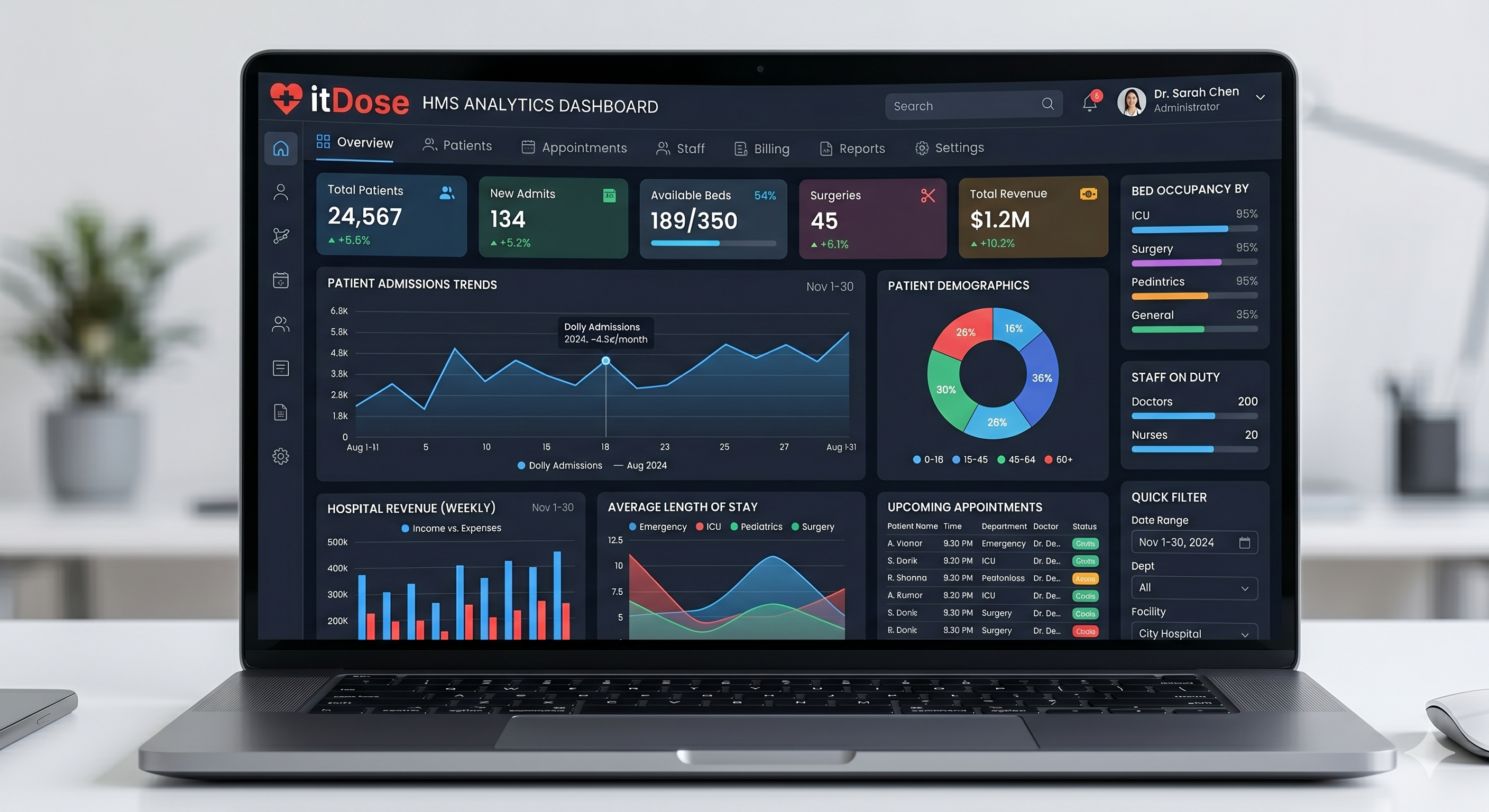
A useful hospital dashboard does more than display numbers. It helps managers identify delays, compare departments, and decide where action is needed.
What to Track
- Admission, discharge, and transfer movement.
- Billing and collection trends.
- Inventory alerts and department utilization.
- Doctor-wise activity, patient waiting time, and service turnaround time.
- Pending approvals, unbilled services, and discharge bottlenecks.
From Data to Action
Dashboards become valuable when they help leaders act quickly. If occupancy is high, the team can review discharge delays. If collections are falling, billing can check pending invoices. If inventory consumption rises suddenly, purchase teams can verify stock movement.
Designing Better Dashboards
Good dashboards should be simple, role-based, and updated frequently. Senior leadership may need financial and operational summaries, while department heads need queue-level visibility. Showing everyone the same dashboard usually creates noise instead of clarity.
The goal is not to track every possible metric. The goal is to surface the few signals that help teams improve patient flow, revenue discipline, and service reliability.