The Shift Toward Connected Hospitals
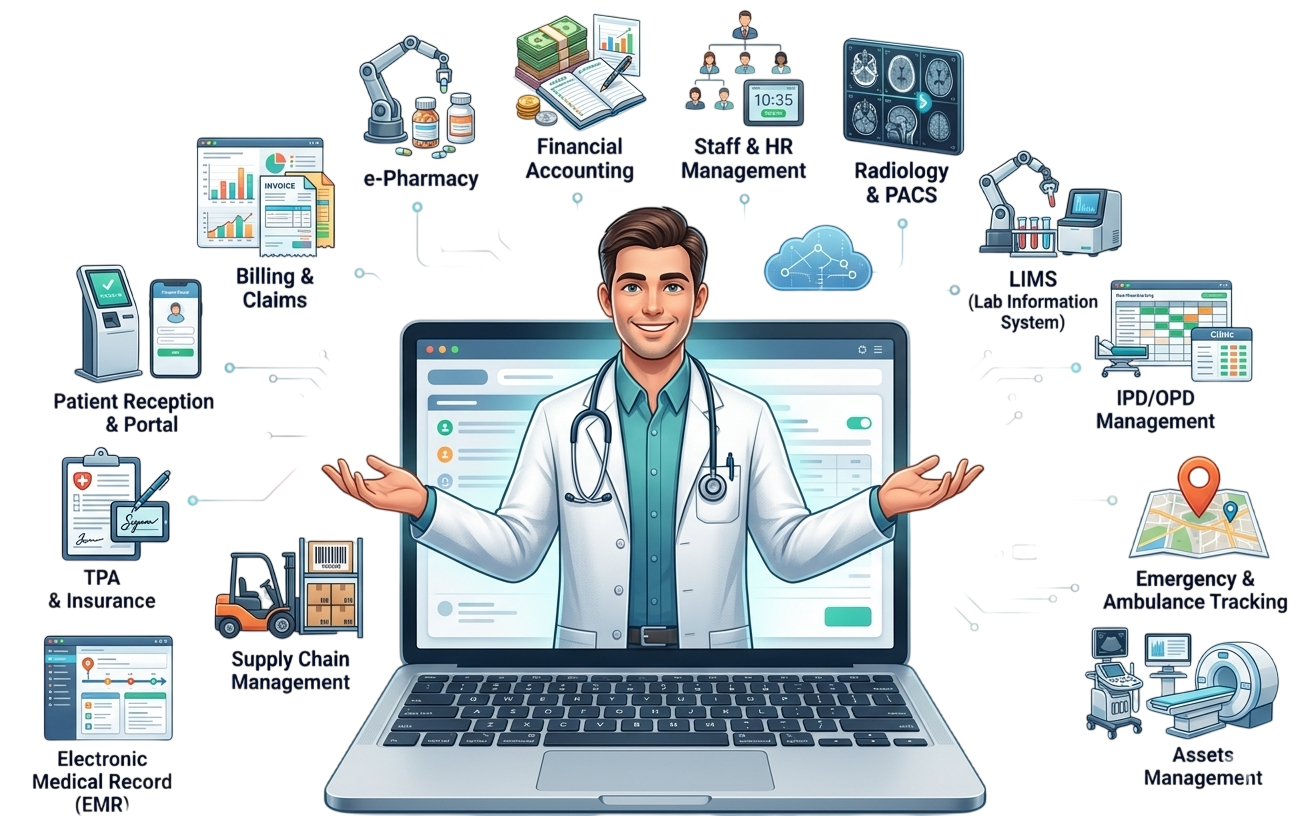
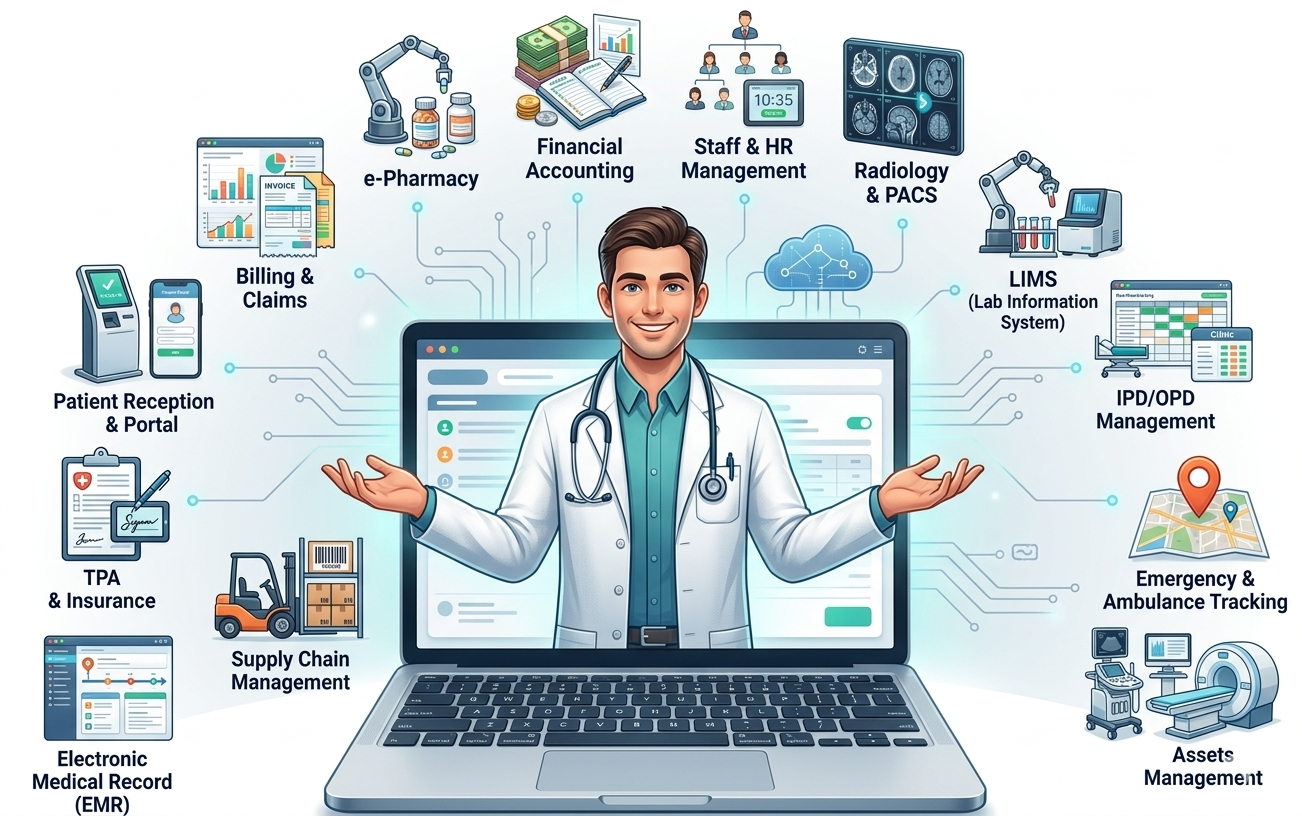
Smart hospitals rely on connected workflows across reception, wards, pharmacy, laboratory, radiology, billing, and administration. When data moves cleanly between departments, patients spend less time waiting and teams spend less time reconciling information.
Operational Gains
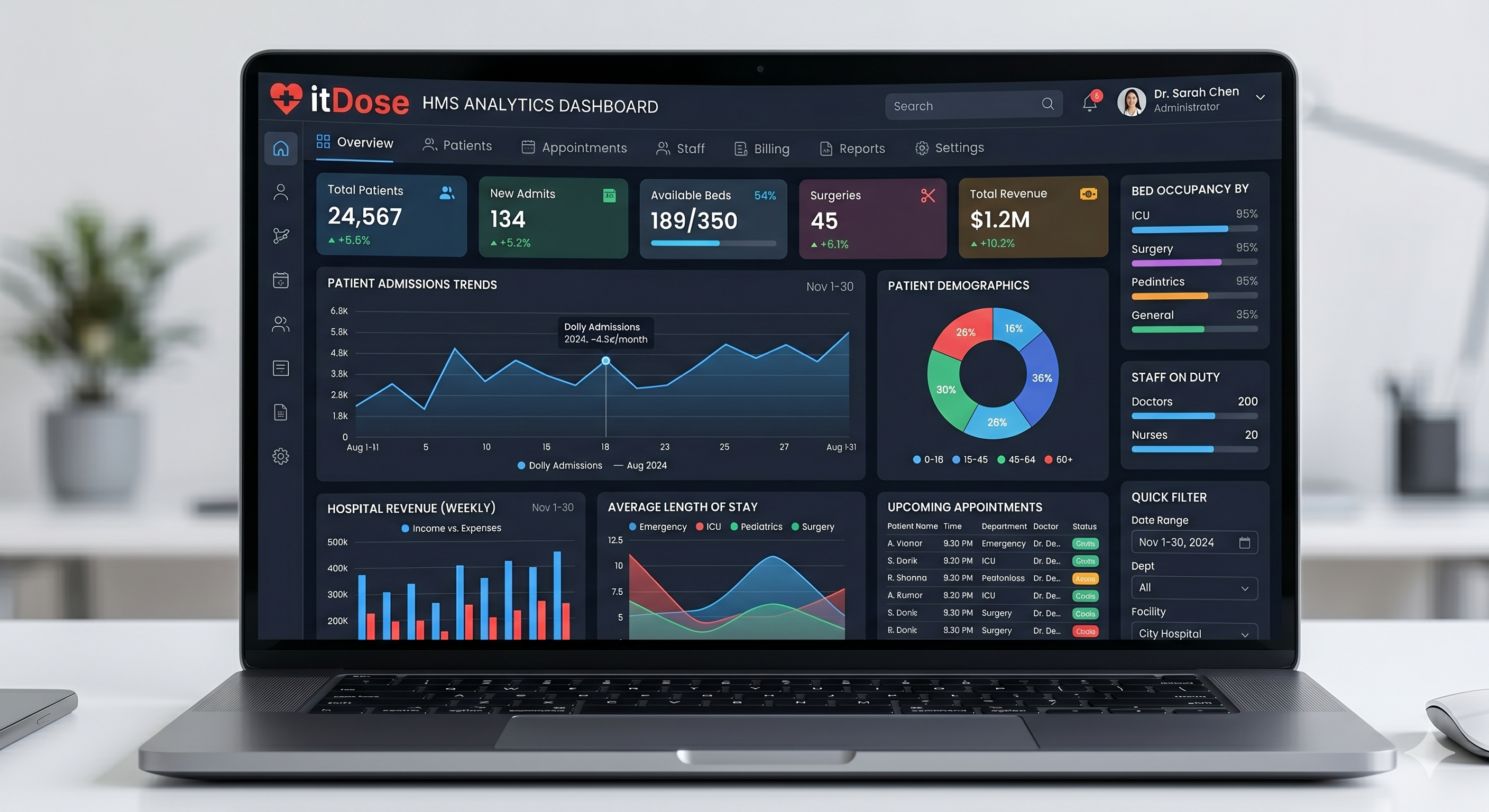
Digital hospital management helps leaders monitor admissions, discharge status, revenue, inventory, and turnaround times with better accuracy. This clarity supports faster decisions and more predictable care delivery.
A hospital management system also reduces hidden operational leakage. Missed billing items, delayed discharge summaries, unclear stock usage, and disconnected department reports can quietly affect both revenue and patient satisfaction. Connected workflows make these gaps easier to identify.
Departments That Benefit Most
- Front office: Faster registration, appointment handling, admission, and discharge coordination.
- Clinical teams: Better visibility into orders, notes, patient history, and care plans.
- Billing teams: More accurate charge capture, packages, insurance, and payment tracking.
- Management: Live dashboards for occupancy, collections, pending work, and department performance.
Why This Matters for Growth
As hospitals add beds, specialties, branches, or diagnostic services, manual coordination becomes harder to scale. A smart digital foundation gives leadership the structure needed to grow without losing control over quality, cost, and patient experience.
A smart hospital is not defined by one technology. It is defined by how smoothly information moves from one care decision to the next.