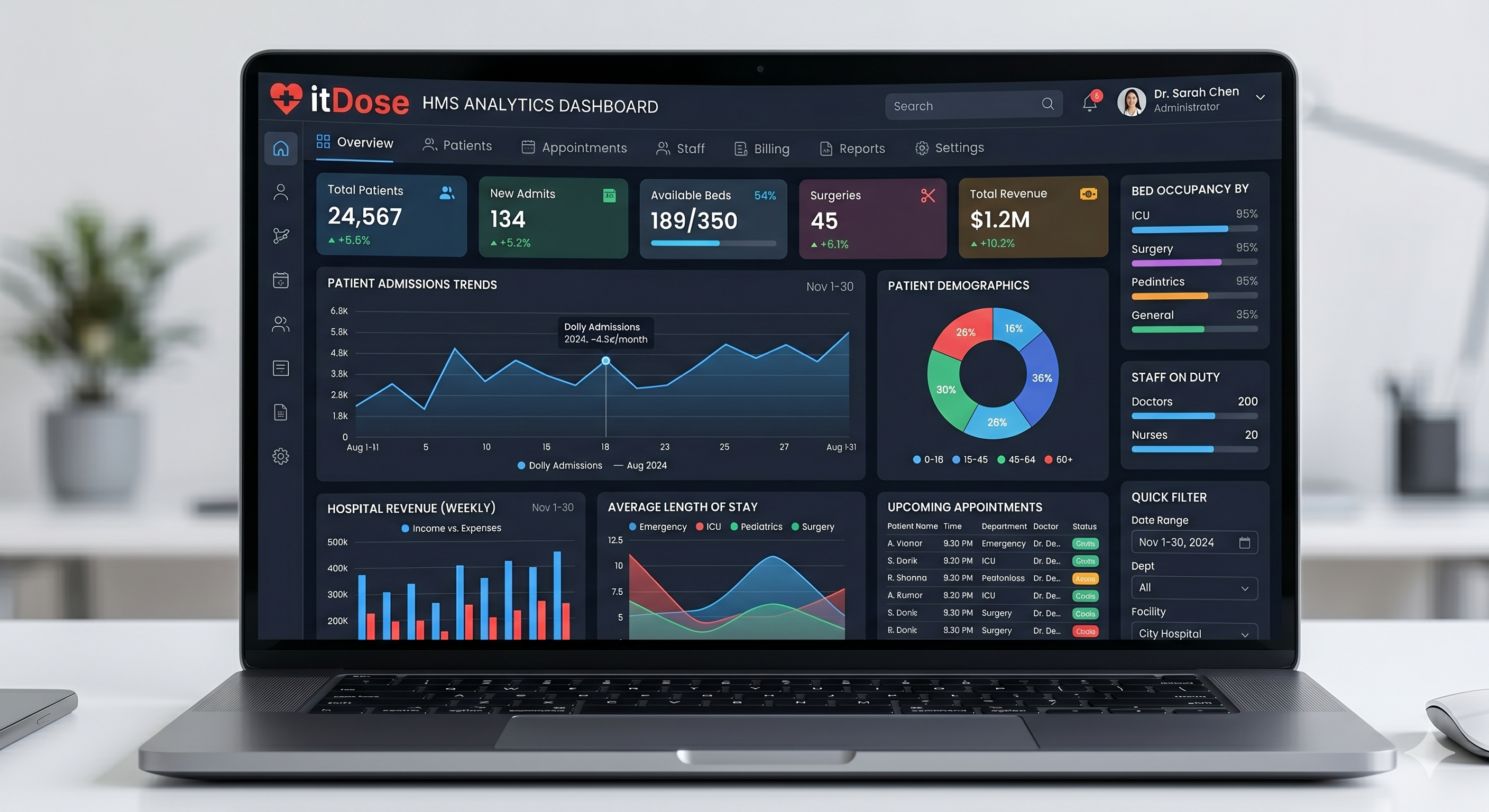
One Platform for Daily Clinic Operations
Modern clinics need fast registration, clean appointment flow, reliable billing, and accessible patient history. A clinic management system brings those daily tasks into one place so teams can work with fewer delays and fewer repeated entries.
For growing clinics, this means better front-desk visibility, faster doctor handoffs, and more consistent patient communication.
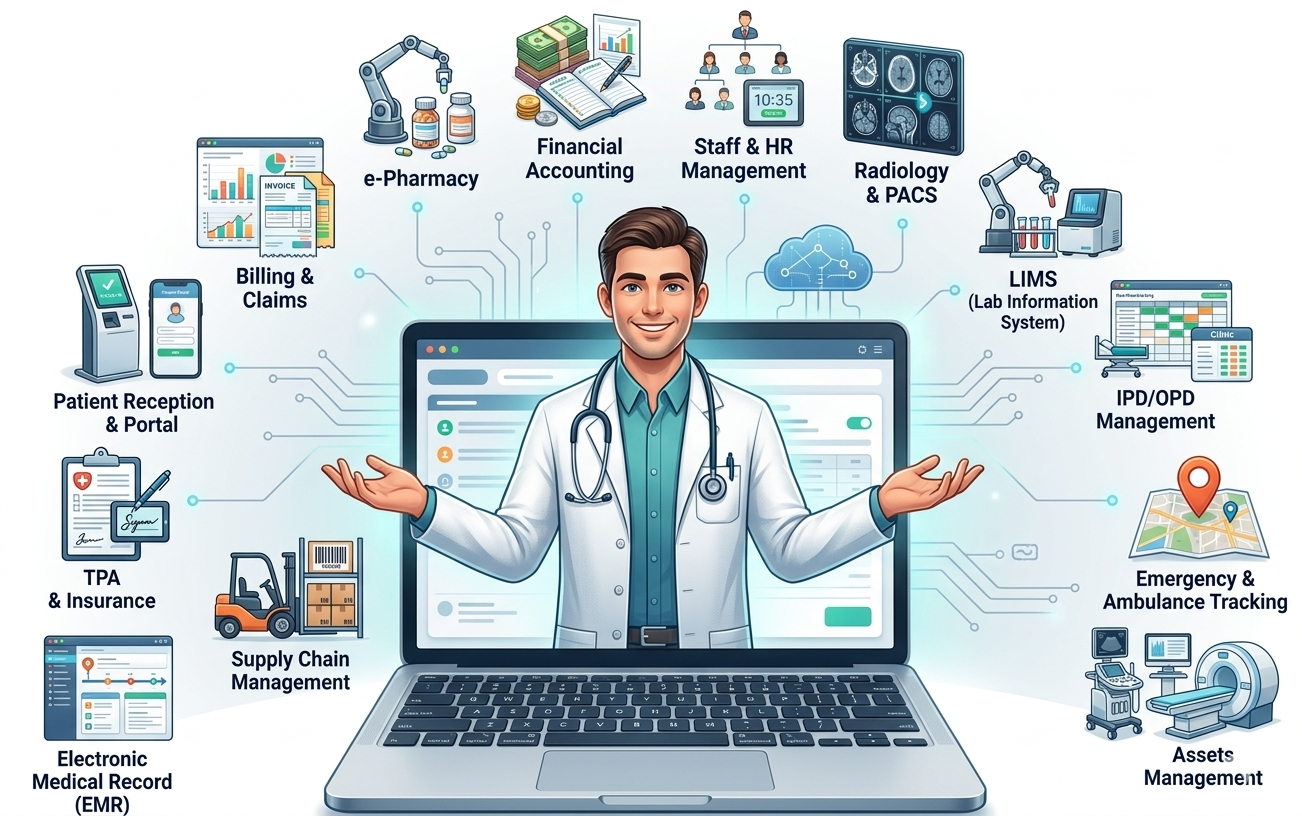
Where CMS Creates Immediate Value
The biggest value usually appears in the first few weeks because the front desk, doctors, billing team, and management start looking at the same patient journey. Instead of maintaining separate notes, registers, spreadsheets, and payment follow-ups, every department can update a single record that travels with the patient.
- Appointments: Schedule, reschedule, and track visits with clearer patient queues.
- Billing: Create invoices, collect payments, and reduce missed charges.
- EMR: Keep prescriptions, visit notes, and patient history accessible for every follow-up.
- Patient communication: Send reminders and updates so patients are less likely to miss visits.
- Reporting: Review daily visits, revenue, pending payments, and doctor-wise activity.
A Better Experience for Patients
Patients notice when a clinic is organized. They wait less, repeat their details less often, and receive clearer information about prescriptions, bills, and follow-up visits. A CMS helps clinics create that experience without adding more manual pressure on staff.
It also supports continuity of care. When the patient returns after a week or a year, the doctor can quickly review previous complaints, investigations, medicines, and advice before making the next decision.
How Clinics Should Start
The best implementation starts with the most frequent workflow: registration, appointment booking, consultation, billing, and follow-up. Once this flow is stable, clinics can add pharmacy, inventory, packages, analytics, and integrations in a controlled way.
The result is a smoother clinic experience for both staff and patients.